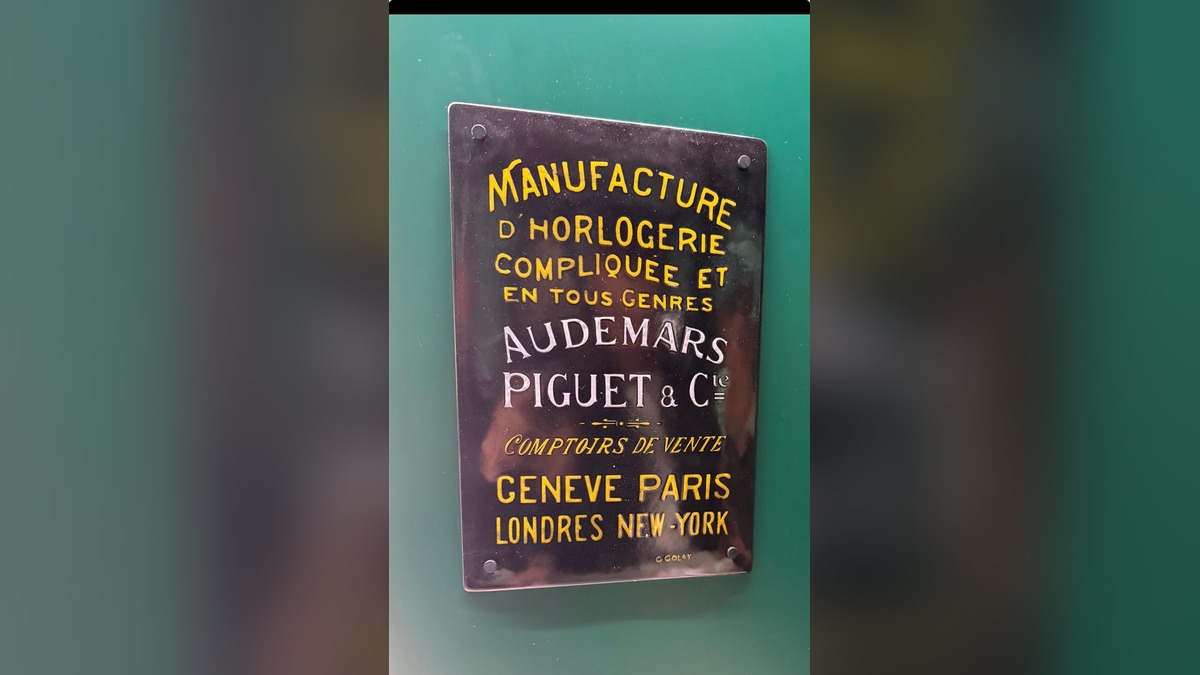
Nearly 10 years after first signalling its intention to enter the secondary market, Audemars Piguet (AP) has finally rolled out its long-anticipated Certified Pre-Owned (CPO) programme. In recent years, the brand had been carrying out trials in markets like the US and Japan, where it allowed the trade-in and sale of pre-owned AP watches. The brand appears to feel that the time is right, Hodinkee broke the news around 9 am on Monday 26th October that AP would be launching its CPO programme in Europe, with plans to expand to other key markets.

Christened “The Watch Keepers,” the programme’s digital platform will be staffed by employees represented by digital avatars. They will assist collectors in shipping their watches to Le Brassus, where each timepiece will be inspected, graded, certified, photographed and documented.
Owners can then opt to sell at a fixed price or via auction. While Audemars Piguet handles custody and fulfilment, the watches remain the consignors’ property until sold. The portal will feature an inventory of roughly 100 pieces at any given time, while prospective buyers can expect transparent condition reports and personalised recommendations from the brand's virtual staff.
This programme will be spearheaded by Marc Montagne—a former Vacheron Constantin executive appointed as Director of CPO—the initiative represents a decisive effort by the Le Brassus manufacture to capture lifecycle value, manage secondary pricing and deepen relationships with its clientele. Looking to reap these advantages, both Vacheron Constantin and Jaeger-LeCoultre rolled out CPO programmes of their own in 2024 and 2023 respectively.
By analysing the structure of AP’s business relative to market forces, we can evaluate the core advantages, pros, cons and potential stumbling blocks of this strategic pivot.
Key Advantages and Opportunities
AP is surely drawing insights from Rolex’s CPO initiative, which has grown to generate an estimated $1 billion per year for the Crown since its December 2022 launch. However, AP and Rolex’s circumstances have slight differences.
Direct Boutique Integration & Operational Agility:

Unlike Rolex—which relies on a fragmented network of independent authorised dealers (ADs) to execute its CPO programme—Audemars Piguet operates a fully direct-to-consumer (D2C) boutique model, centered on its flagship AP Houses. This vertical integration eliminates friction between the brand and the point of sale, giving AP end-to-end control over authentication, inventory allocation and the customer experience.
Reclaiming Market Share and Authenticity Control:
By bringing secondary transactions in-house, AP directly challenges counterfeiters. A brand-backed guarantee neutralises buyers' fears regarding super-cloned fakes and tampered parts, allowing AP to recapture lucrative margins previously lost to bad actors.
Managing the Royal Oak Halo:

The CPO channel provides AP with a flexible valve to manage its core asset—the Royal Oak. The CPO programme provides the sweet spot for customers who desire the Royal Oak enough to pay a premium for a certified genuine one, a premium that cuts out the frustration of waitlists and accumulating ‘spend history’.
Offering certified pre-owned Royal Oaks creates an immediate entry point for collectors shut out by primary supply constraints, keeping these high-intent buyers engaged within the official AP ecosystem. But the question arises: At what cost to the client vs. third-party secondary platforms?
Price Stabilisation Mechanism:
With internal authentication and direct pricing control, AP gains the capacity to influence pre-owned price floors. By purchasing trade-ins and pricing CPO inventory intentionally, the manufacturer can dampen volatile market swings, helping protect residual values across its product catalogue.
Strategic Risks and Stumbling Blocks

Although some AP models are currently trading close to their retail values, we expect AP to price its CPO offerings at a significant premium over new pieces. This markup reflects the value of bypassing long waitlists, lets AP set its own official benchmark for the brand's secondary market worth, and absorbs the overheads (i.e. inspection, authentication and servicing) of running the program.
The Soft Secondary Market Vulnerability:
Despite all we’ve discussed thus far, a CPO programme cannot single-handedly override organic macroeconomic demand. While flagship Royal Oaks retain high demand, soft market sentiment has seen certain Royal Oak Offshore references and Code 11.59 models trade near or below retail pricing.
If broader secondary values continue to dip, inflated CPO price tags will alienate collectors, while aggressively discounting CPO stock risks eroding primary retail price integrity.
Capital Allocation and Inventory Risk:

Running a global CPO operation requires significant capital tied up in trade-in inventory, servicing, and refurbishment. Holding slow-moving pre-owned inventory in prime retail real estate like AP Houses risks cannibalising new production sales if not managed with precise balance.
This raises an inevitable question for collectors: Will CPO purchases count toward one’s official spend history? AP is almost certain to separate the two, as allowing pre-owned transactions to unlock allocations would directly undermine demand for its primary, first-hand offerings.
Servicing Bottlenecks:
Every CPO timepiece requires rigorous inspection, authentication and servicing before hitting the showroom floor. In an industry already facing a chronic shortage of master watchmakers, scaling the CPO programme could stretch AP’s technical centres, potentially increasing service turnaround times for existing retail clients.
Audemars Piguet’s CPO initiative represents a natural evolution toward total brand lifecycle management. Leveraging its direct retail footprint gives AP a distinct operational edge over competitors like Rolex.
However, the ultimate success of the programme will not hinge on marketing or boutique placement, but on the true underlying equity of its watches. If secondary market values face sustained headwinds, no amount of internal retail pricing control will shield AP’s brand equity from the realities of broader market demand.
Upon watching the Watch Keepers introductory video (https://www.youtube.com/watch?v=iTwvjCEkWjs), one of our team commented that it felt like Jaguar's rebrand campaign in November 2024—and some might remember what happened there. However, this isn’t a rebrand but more of an additional pillar to AP’s business model.
Between expanding into fine jewellery, opening a luxury hotel, and its Swatch abomination collaboration, Audemars Piguet has kept its hands full with nearly everything except creating a genuinely desirable new watch.
While the Royal Oak continues to make hay while the sun shines, the persistent struggle of its intended heir—the Code 11.59—relative to recent, buzzed-about releases from competitors like Patek Philippe and Rolex, has seemingly left AP nursing a sting too painful to confront.
It is admirable to watch peers like Jaeger-LeCoultre and Piaget repeatedly take creative risks to craft their next icons. By contrast, it is disheartening to see a member of the Holy Trinity retreat from core horological ambition and resign itself to becoming merely another lifestyle brand.
FAQ's
1. Is buying an Audemars Piguet through its CPO programme worth the premium?
AP's CPO programme offers manufacturer-backed authentication, detailed condition reports and a more secure buying experience. However, certified pre-owned watches may carry higher prices than those offered by independent dealers. For collectors, the decision comes down to whether the added reassurance and convenience justify the premium.
2. Can Audemars Piguet's CPO programme influence Royal Oak prices in the secondary market?
The programme gives AP greater influence over certified pre-owned pricing, particularly for highly sought-after Royal Oak models. However, it cannot fully control secondary market values, which ultimately depend on collector demand, availability and broader economic conditions.
3. Will purchasing a certified pre-owned Audemars Piguet improve a collector's chances of receiving rare new watch allocations?
There is currently no confirmed indication that CPO purchases will count towards a collector's official purchase history or improve access to limited-production watches. The article suggests AP is likely to keep pre-owned transactions separate from new watch allocations to protect demand for its primary collections.
4. Could Audemars Piguet's focus on certified pre-owned watches weaken its reputation for watchmaking innovation?
The CPO programme creates an additional revenue opportunity, but it also raises questions about AP's long-term priorities. With the Royal Oak continuing to dominate collector interest and the Code 11.59 facing a more challenging market, the brand must balance commercial expansion with the development of distinctive new timepieces that strengthen its watchmaking legacy.