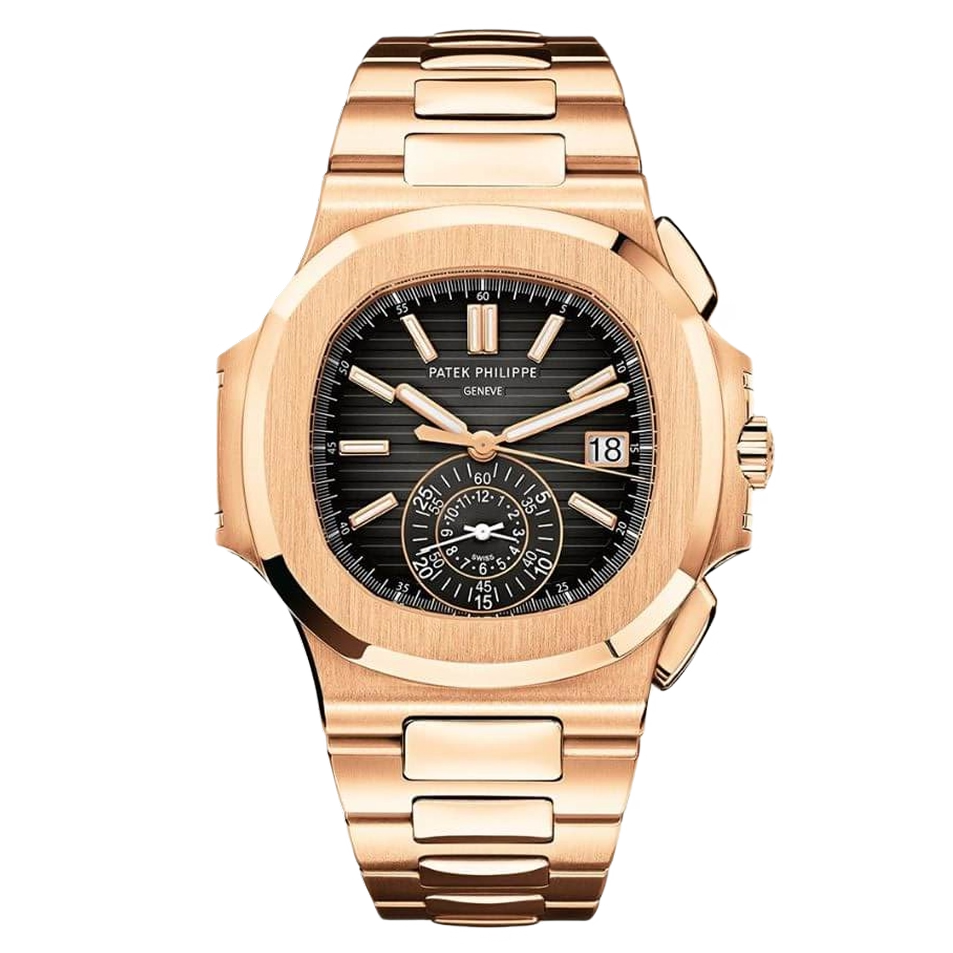
Patek Philippe brought its Watch Art Grand Exhibition to Milan this October and put the city's name on the casebacks of seven new limited editions. Milan has been signing Pateks for generations, and the collector who understands why holds the advantage.
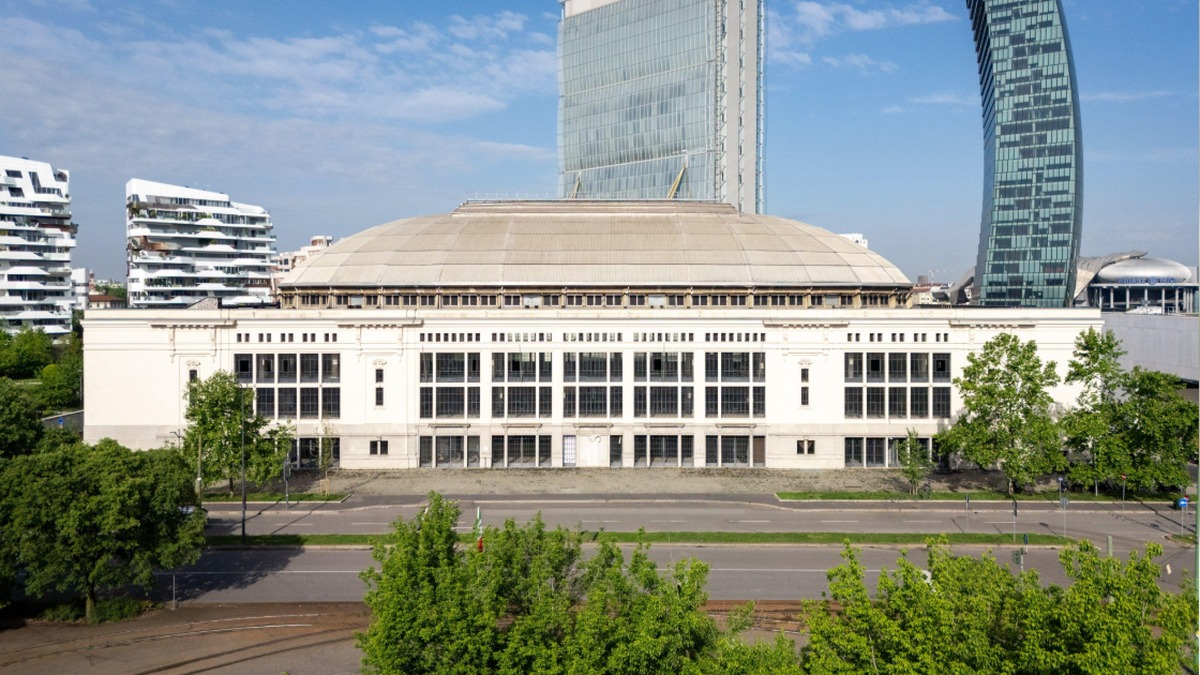
You come up out of the lilac M5 line at Tre Torri into a district that did not exist when your father bought his first watch. Three towers stand over the old fairground. The Milanese call them il Dritto, lo Storto and il Curvo: the straight, the twisted and the curved. At their feet sits an oval pavilion, older than all three, lately restored and renamed CityOval. There is a queue. It is a Milanese queue, which is to say it is well dressed and faintly impatient, and it moves at the pace of a city that regards waiting as a failure of planning.
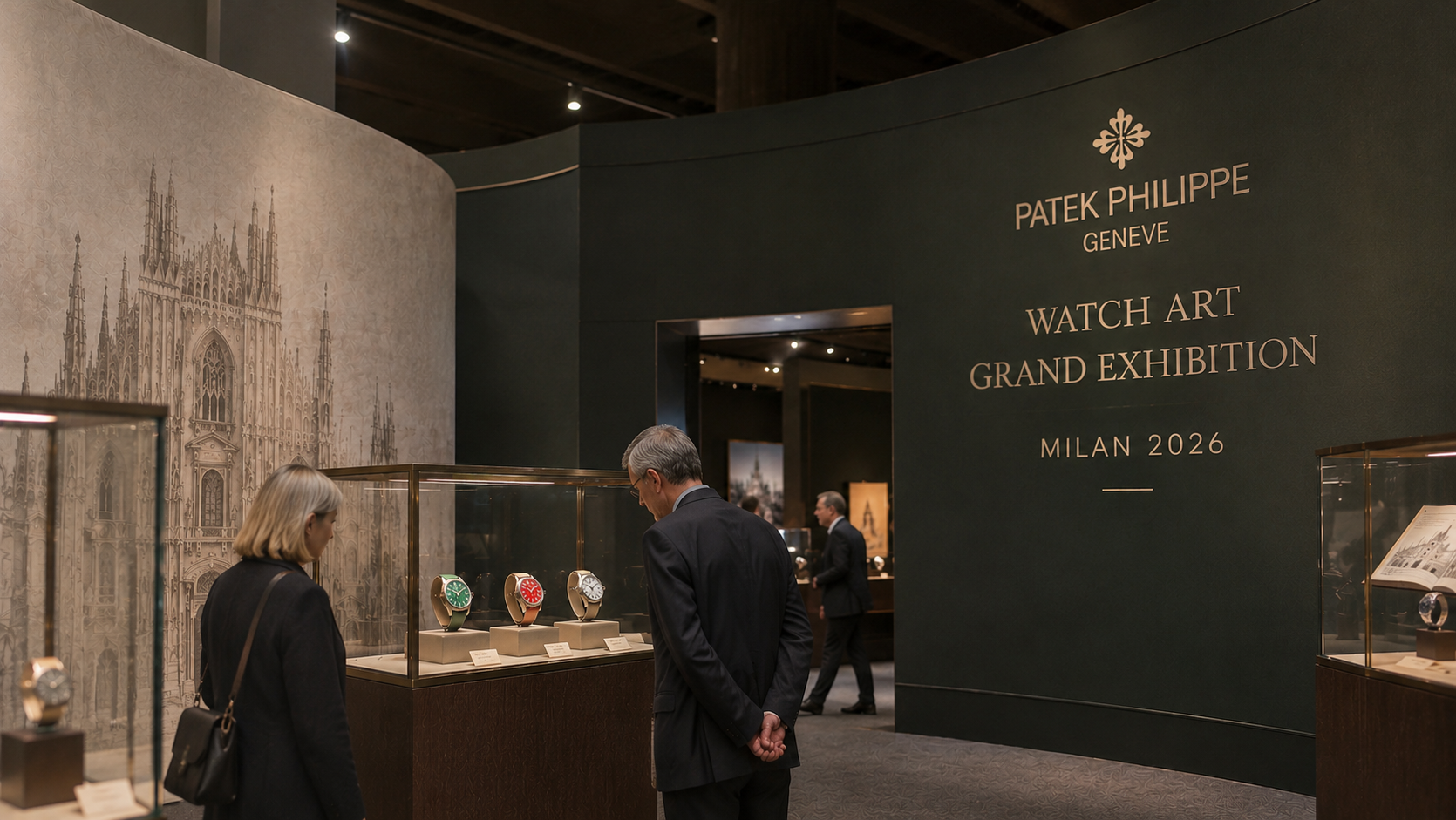
Inside the Watch Art Grand Exhibition in Milan
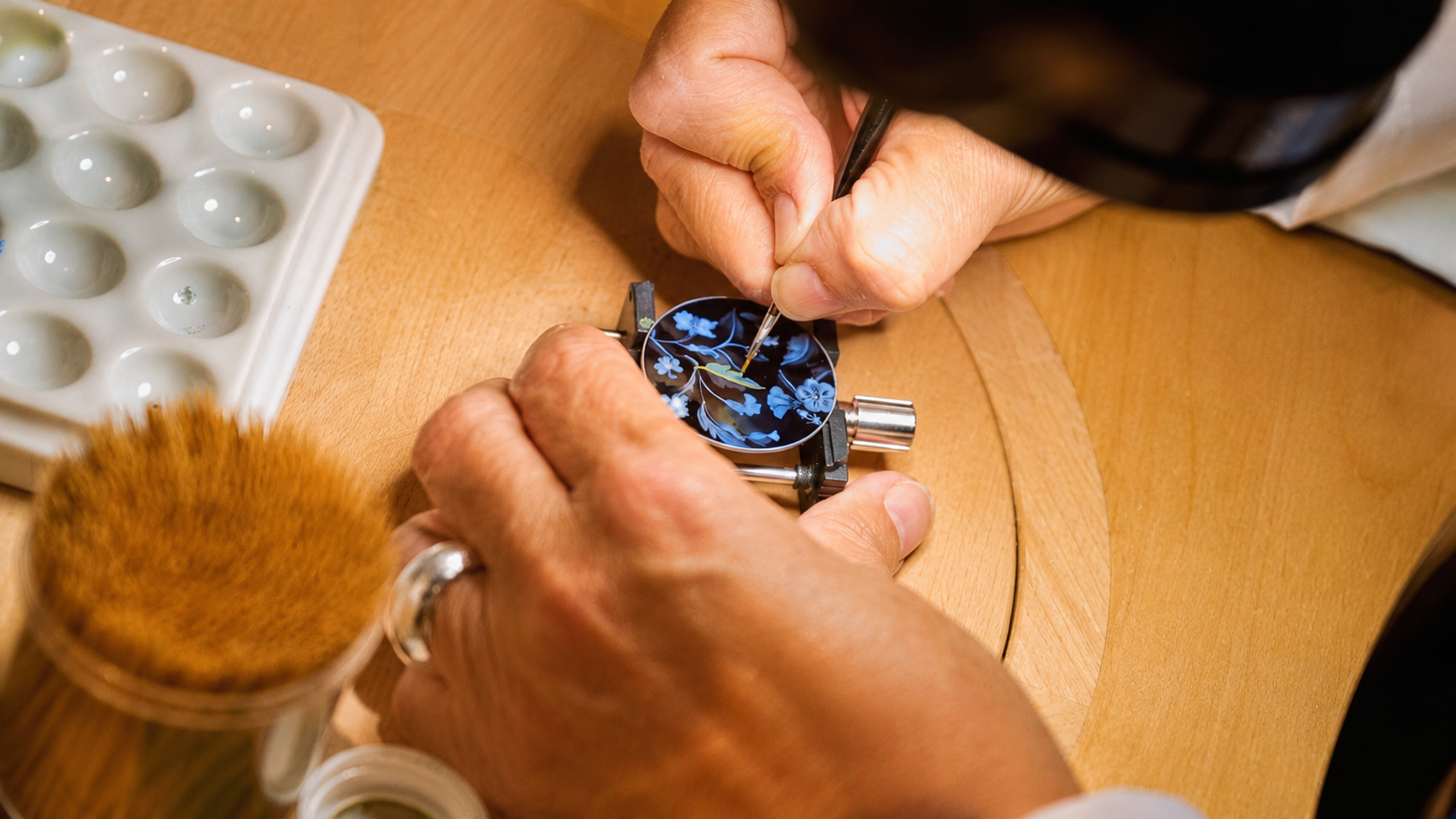
Inside, a woman examines a dial no larger than a coin, laying gold wire for cloisonné with the stillness of a surgeon. Across the hall a watchmaker opens a movement for a ring of schoolchildren and a retired gentleman in a loden coat, and both parties look equally astonished. Entry cost nothing. That is an old Geneva habit: show everything, sell nothing, and let the wanting do the work.
For seventeen days in October, Patek Philippe's Watch Art Grand Exhibition filled some 2,500 square metres with around 500 watches and objects across fifteen themed rooms. More than ninety pieces travelled from the Patek Philippe Museum: royal pocket watches, historic world timers, objects that seldom leave the Rue des Vieux-Grenadiers. It was the seventh such exhibition, after Dubai, Munich, London, New York, Singapore and Tokyo, and the choice of city was not sentimental. Italy was one of the house's principal markets in the second half of the last century, and the Italians were the collectors who taught the rest of the world to look closely at a dial.
Gobbi Milano: Why an Italian Signature Matters
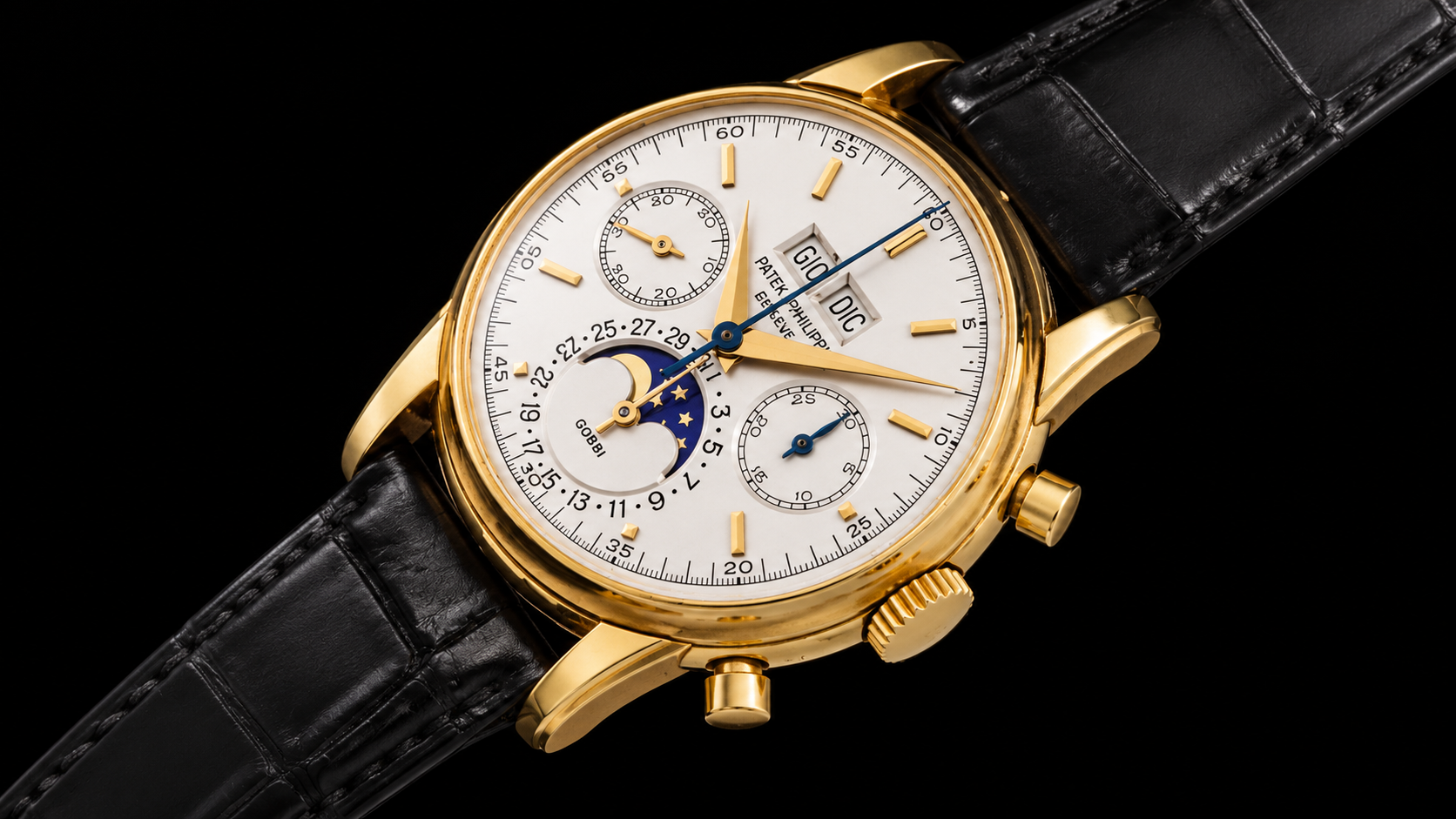
They also taught the world to read one. Turn the pages of the Geneva catalogues at Phillips and Sotheby's and you will meet the same two words, printed above six o'clock: Gobbi, Milano. The house began as a workshop in Modena in 1842, rose to become one of Italy's leading watch retailers, and was among those Patek Philippe permitted to sign its dials. A 2526, a pink-gold 1579 with spider lugs, a 2499: the double signature turns up on watches collectors wait years to see, and it moves the hammer when it does. A retailer's name is a small thing. It is also a record: this watch was sold here, to someone, at a time. Markets pay for records.
The Seven Patek Philippe Milano 2026 Limited Editions
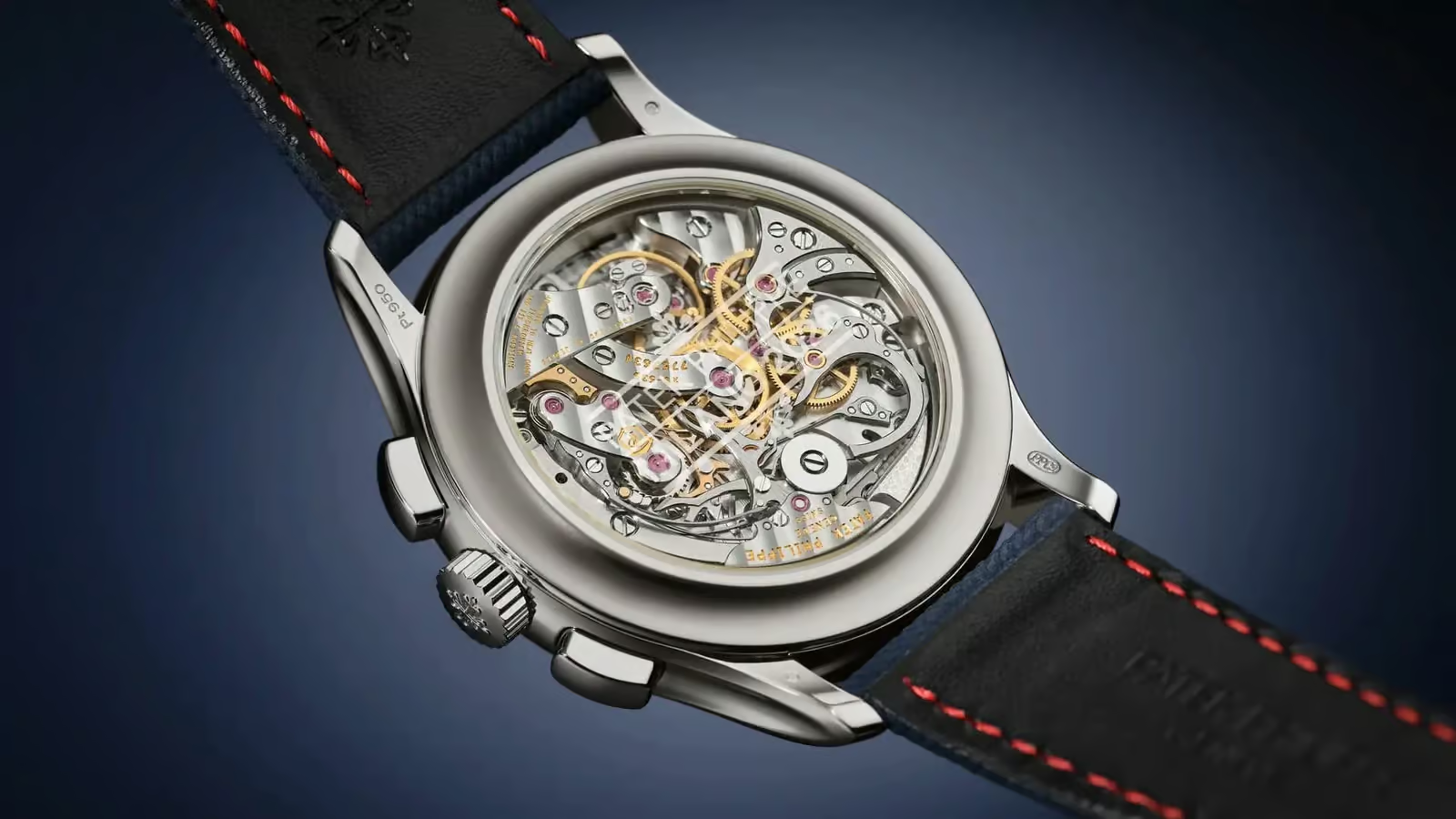
Which brings us to the casebacks. Patek made seven limited editions for Milan, 685 pieces in all, and every one carries the same transfer on its sapphire: Patek Philippe Milano 2026. Gobbi signed the dial. The manufacture now signs the back. The city has simply moved round the watch.
The editions divide neatly by ambition.
The World Time Minute Repeaters: 5531G-012 and 5531G-013
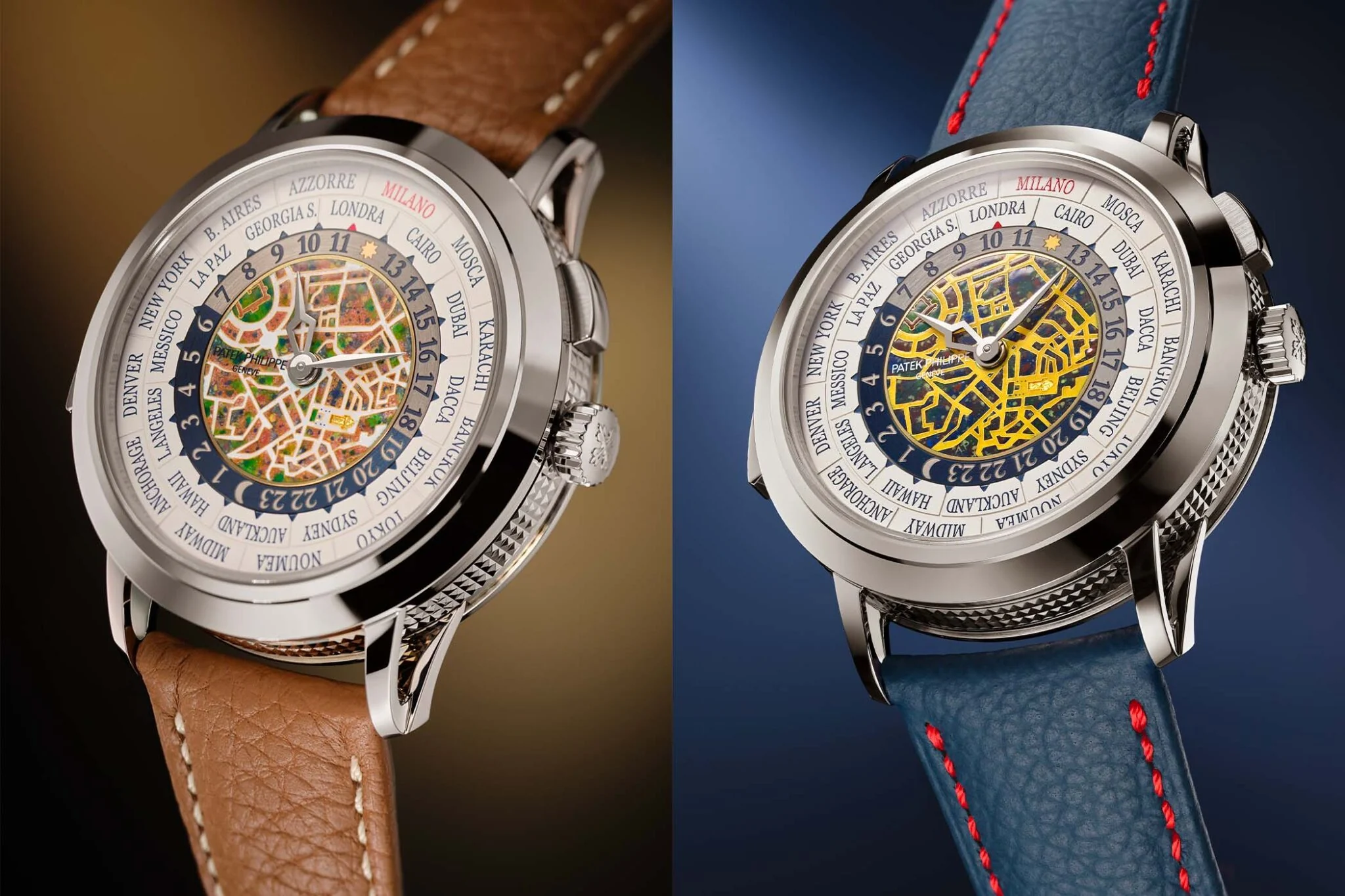
At the top sit two world time minute repeaters, references 5531G-012 and 5531G-013, five pieces each. Their cloisonné dials map central Milan by day and by night, and they are priced in the territory of a two-bedroom flat in Brera.
The Calatrava Tricolore: 7047G, 7147G and 7007G
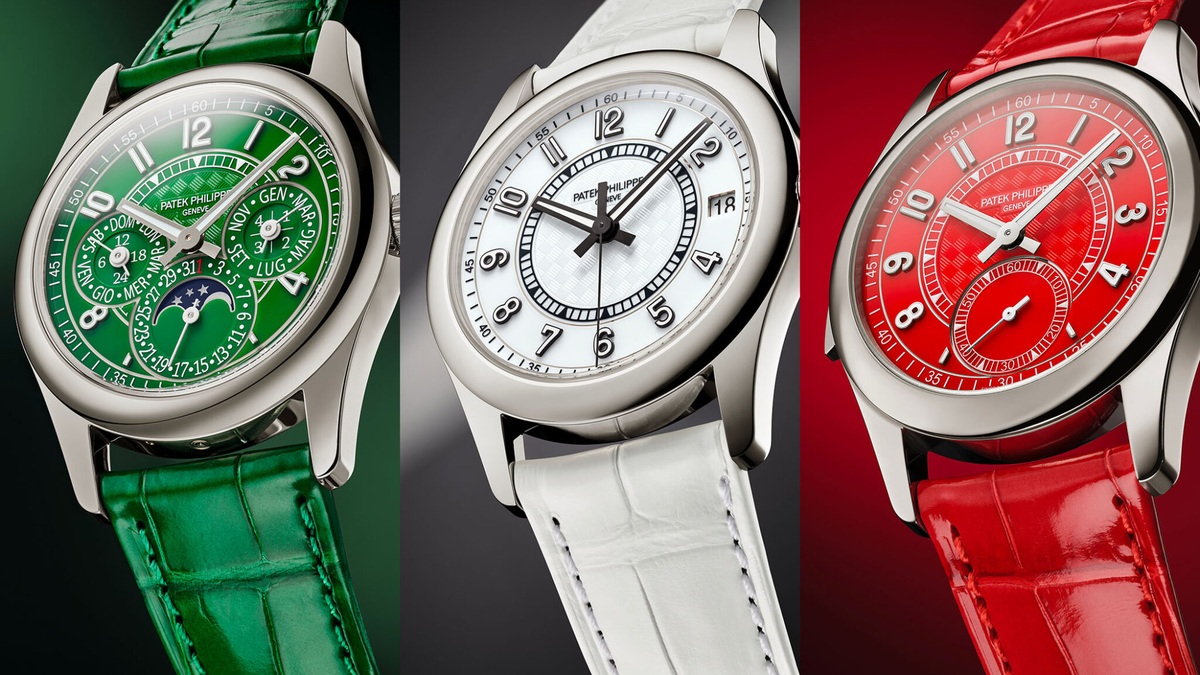
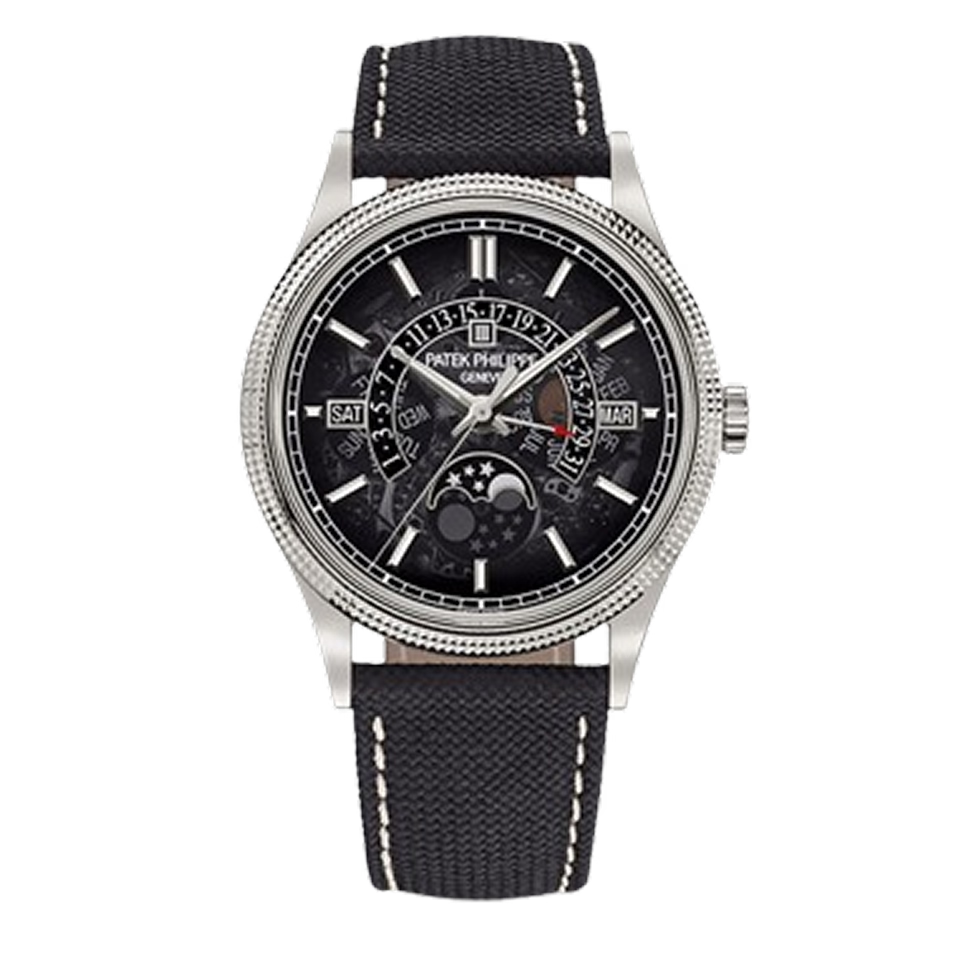
Beneath them stands a Calatrava tricolore: a red-dialled 7047G minute repeater in five pieces, a green 7147G perpetual calendar in one hundred with its calendar written in Italian, and a white 7007G date and centre seconds in two hundred. Each strap ends in a small tab in the national colours.
The Aquanaut 5167A-014
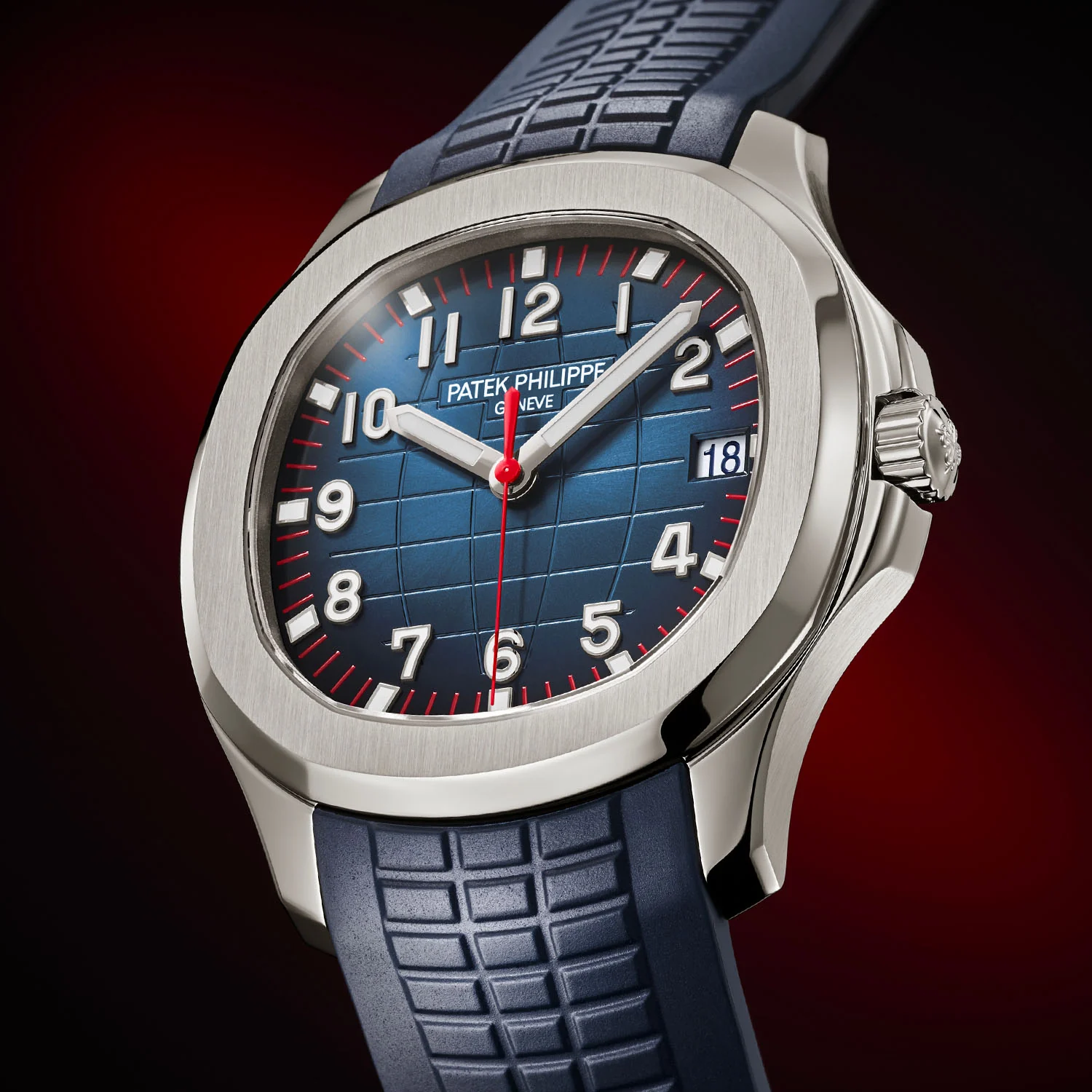
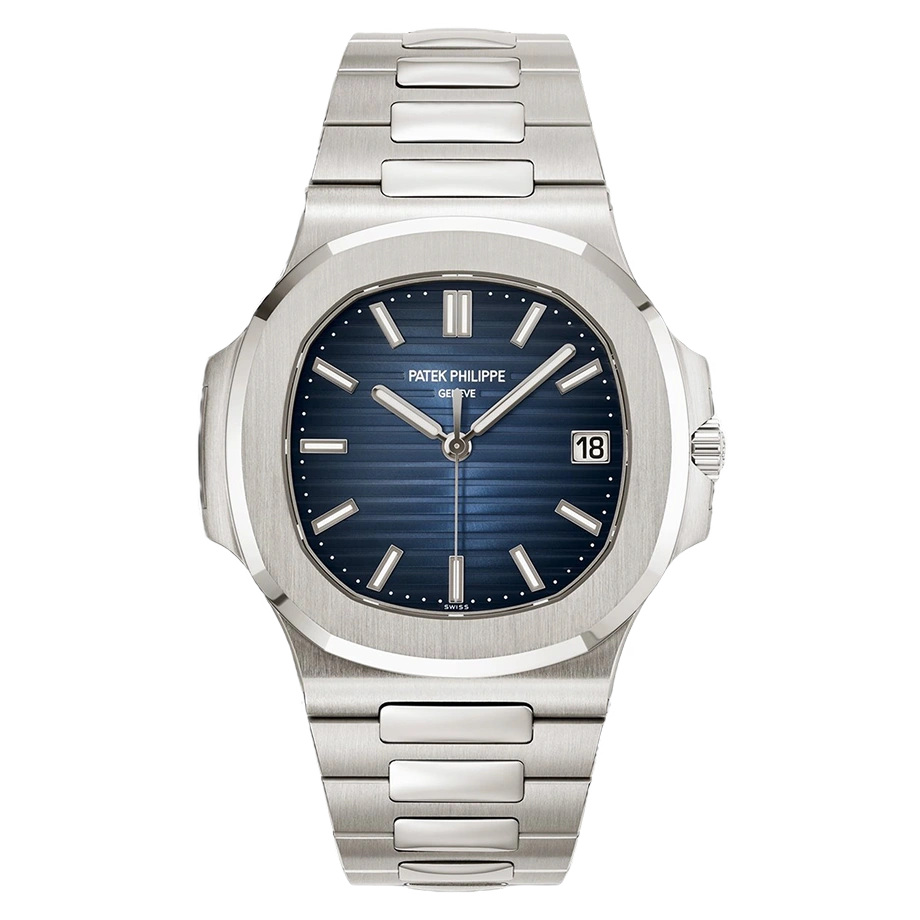
A steel Aquanaut, the 5167A-014, runs to 250 pieces. Its dial fades from blue to black, and its seconds hand is red.
The 5978P-010: A First for Patek Philippe
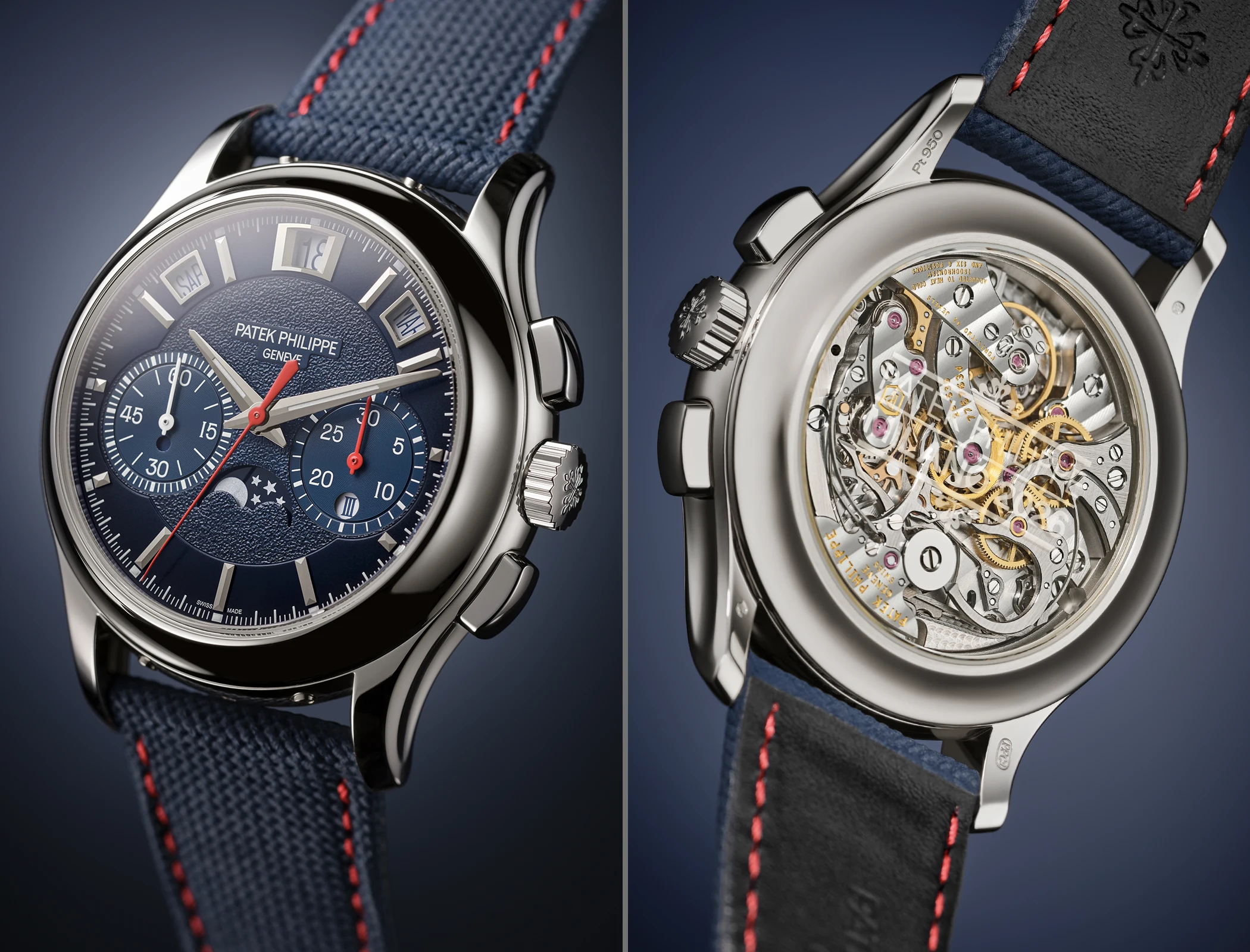
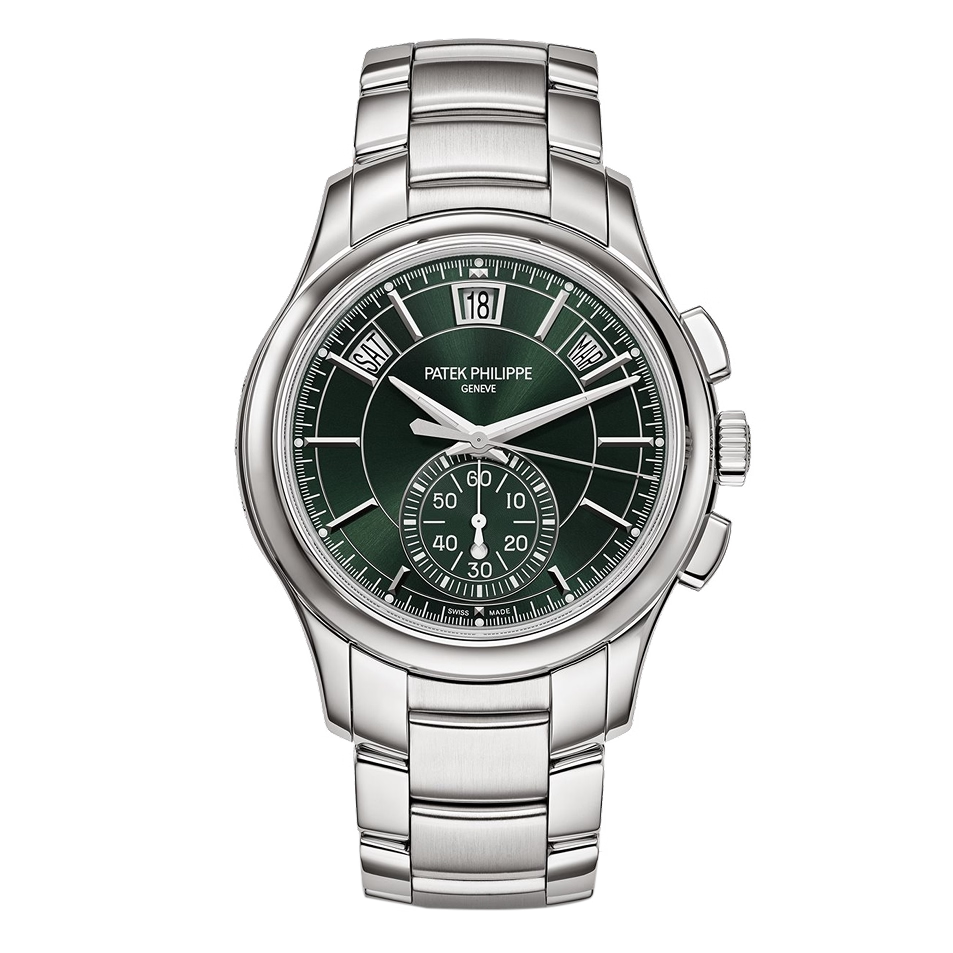
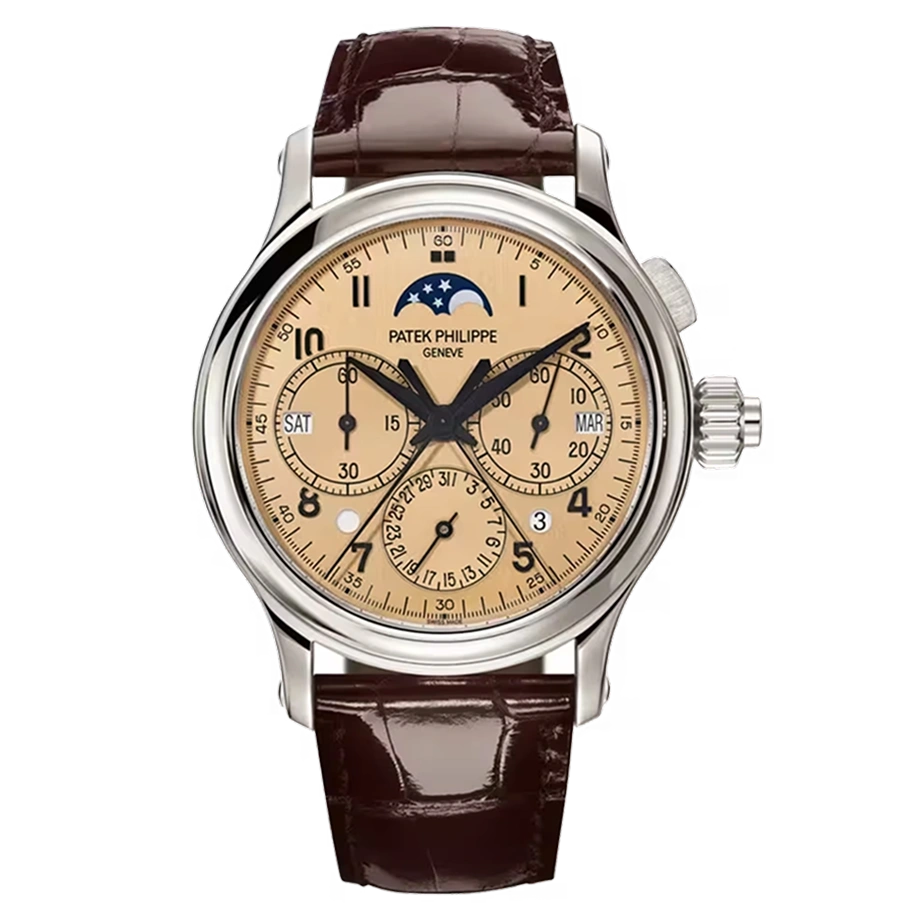
And then there is the 5978P-010, the one the auction rooms will still be discussing in thirty years. Made in 120 pieces in platinum, it is the first Patek to pair a chronograph with an instantaneous perpetual calendar: every indication changes at midnight in the same instant, and the chronograph's minute counter jumps too. Its family tree reads like a sale-room roll call: the 1518 of 1941, then the 2499, the 3970, the 5970, the 5270. It knows its lineage, and so should you.
How to Collect a Patek Philippe Milano Piece
Most of these watches went to Italian clients, and the five-piece repeaters will never see a shop window. The exhibition made its argument in public, and the argument travels. Provenance is a signature of place, and signatures compound. Read it correctly and you can act on it from Singapore or Sydney as easily as from Via Montenapoleone.
Hunt the larger runs
If you want a Milano piece, hunt the larger runs: the Aquanaut and the white Calatrava. First resales will most likely surface in Europe before they reach Asia, so be patient. Insist that the certificate of origin names an Italian retailer and a date, and insist on the original strap, tab and all. On a watch whose whole point is where it was sold, the paperwork is the watch.
Buy into the 5978P's family
If the 5978P is beyond reach, and for most it will be, buy into the family instead. The 5270 runs on the same chronograph base, and the 5970 and 3970 still change hands in Hong Kong, Singapore and Sydney. A new heir rarely cheapens the family silver.
Verify any Gobbi dial
And if a Gobbi dial tempts you, remember that a second signature is the first thing a forger adds. Ask for the Extract from the Archives, and look for an unrestored dial. A signature without a record is only ink.
After the Exhibition: An Aperitivo in Milan
Bar Basso or Via Montenapoleone, for atmosphere. Alt text: Negroni Sbagliato at Bar Basso, Milan
Then go and sit down. Cova on Via Montenapoleone will pour you a coffee at the bar, standing, the way the Milanese take it. Bar Basso on Via Plinio will pour you a Negroni Sbagliato in a glass the size of a goldfish bowl. Order the second one. The watches have waited a long time for you. They can wait through an aperitivo.